Chlorine taste and smell
An activated-carbon configuration can reduce chlorine-related taste and odour.

Kelowna and Area: (778) 477-6660
Alberta Area: (780) 229-4475
Saskatchewan Area (306) 790-0551
CarbonShield · Whole-home carbon filtration
CarbonShield is designed around the disinfectant in your supply and the flow your household needs. We select the carbon type and media volume, then fit the system into your home's treatment plan.
1.0, 1.5, 2.0 and 3.0 cu. ft. configurations
Watch how it works
Water, explained · 03
Inside activated carbon, a network of pores provides surfaces where certain dissolved organic compounds can adhere.
Water moves through the carbon and reaches its internal surfaces.
Some dissolved organic compounds adhere to those surfaces. Different compounds behave differently.
Adsorption capacity is finite. Water can still flow when media is due for replacement.
Adsorption of organic compounds is illustrated. Free-chlorine reduction also involves reactions at the carbon surface. Follow the system’s service plan.
A simplified explanation with compressed time and enlarged particles. Equipment design and treatment results vary with the selected system and your water. Learn more: US Environmental Protection Agency ↗
The everyday difference
Carbon type, contact time and the amount of media all influence how a whole-home filter performs.
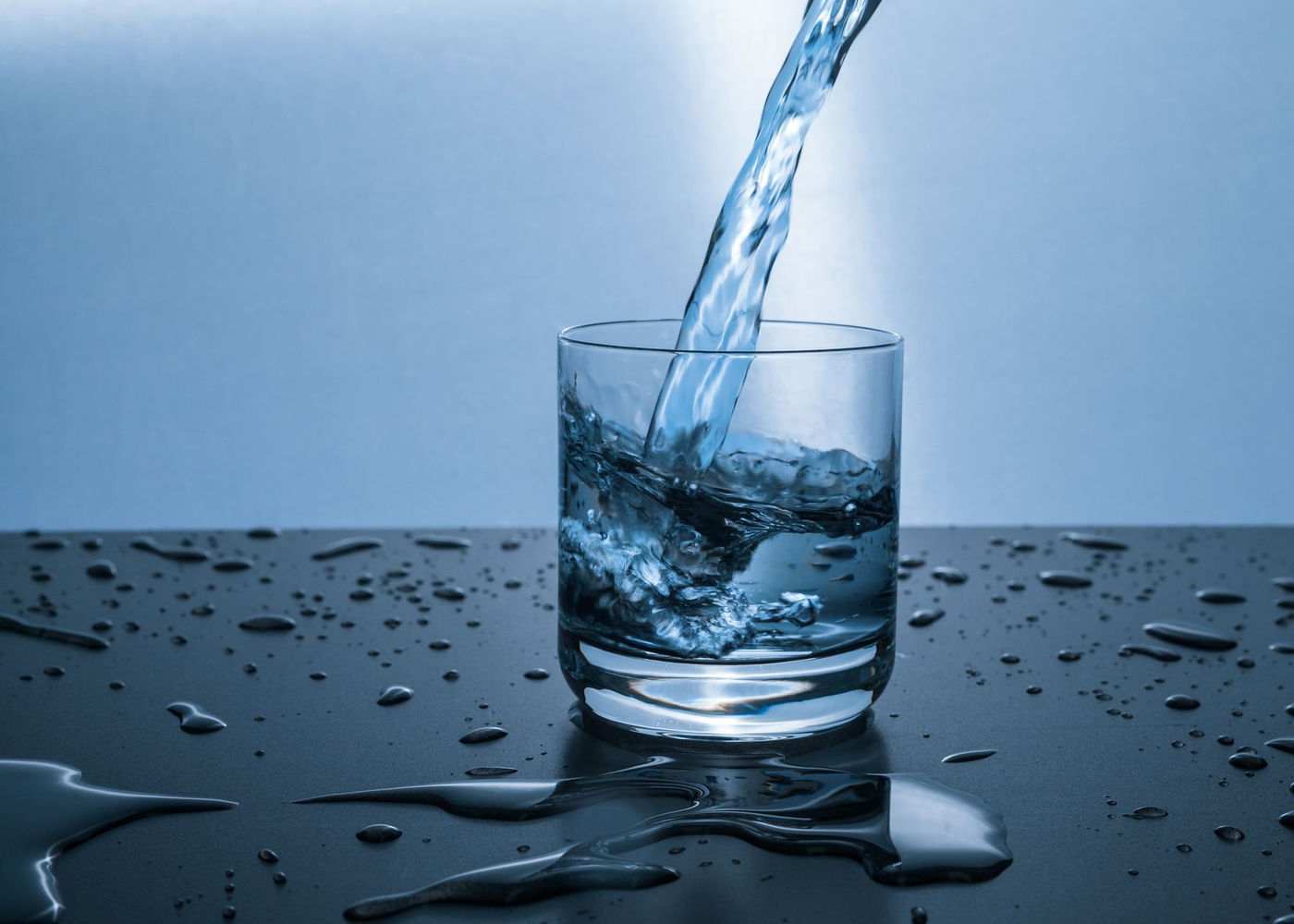
An activated-carbon configuration can reduce chlorine-related taste and odour.
Catalytic-carbon configurations are selected when chloramine treatment is needed.
Choose media volume and operating flow together, including times when several fixtures run at once.
Carbon filtration does not soften hard water. It also does not replace a disinfection system or a contaminant-specific treatment plan where those are required.
How we approach it
A small cartridge and a full media tank provide different amounts of carbon. We choose the arrangement for the treatment objective and flow, rather than assuming every carbon filter will perform the same way.

The details
Compare the sizes and performance. We help match the configuration to your water and home.
| Specification | 1.0 cu. ft. | 1.5 cu. ft. | 2.0 cu. ft. | 3.0 cu. ft. |
|---|---|---|---|---|
| Carbon volume | 1.0 cu. ft. | 1.5 cu. ft. | 2.0 cu. ft. | 3.0 cu. ft. |
| Service flow | 5.0 US gpm | 7.0 US gpm | 10.0 US gpm | 12.0 US gpm |
| Intermittent peak flow | 7.0 US gpm | 10.0 US gpm | 12.0 US gpm | 15.0 US gpm |
| Treatment tank | 9 × 48 in. | 10 × 54 in. | 12 × 52 in. | 14 × 65 in. |
| Tank and control height | 56 in. | 62 in. | 60 in. | 74 in. |
| Carbon choices | Activated or catalytic | Activated or catalytic | Activated or catalytic | Activated or catalytic |
| System format shown | Backwashing media tank | Backwashing media tank | Backwashing media tank | Backwashing media tank |
Specifications describe the corresponding backwashing configurations. Chlorine-reduction capacity is not a chloramine capacity rating. Actual media life depends on disinfectant concentration, total use, flow and the selected media. Other layouts are assessed separately.
| Specification | 1.0 cu. ft. | 1.5 cu. ft. | 2.0 cu. ft. | 3.0 cu. ft. |
|---|---|---|---|---|
| Backwash flow required | 4.0 US gpm | 5.0 US gpm | 7.0 US gpm | 10.0 US gpm |
Backwashing cleans the media bed. These figures are the flow needed during backwashing, in US gallons per minute, not the total water used per cycle or per day. We check the available supply flow, drain capacity and cycle settings before installation.
Custom-designed systems
We select and combine the right components, size the system and plan the plumbing around the home. Closets, compact utility rooms and unusual layouts are part of the design conversation.
Living with your system
We explain the equipment, the service routine and how to reach us when something changes.
For backwashing systems, keep the programmed cycle and drain functioning as intended.
A change is a reason to check the incoming water and the filter's performance.
The service interval reflects the actual loading and performance, rather than a single lifespan promised for every home.
A few useful answers
They are different disinfectants. That difference affects carbon selection and contact-time requirements.
A sediment cartridge catches particles. Carbon media addresses a different treatment objective; the cartridge's size alone does not establish carbon capacity.
No. Softening is a separate process. The two can be combined when both concerns matter in your home.
Backwashing configurations do. Other formats have different operating and maintenance requirements, which we review for the installation.
A complete treatment plan
Start with your water
Tell us where you are, what you’re noticing and what space you have. We’ll help you understand the next step.